
How to Read an Optical Fiber Cable Datasheet: Core Count, Attenuation, Tensile Strength and Bend Radius
An optical fiber cable datasheet is a project-fit document. It should let an engineer confirm the fiber type, core count, attenuation in dB/km, tensile strength, minimum bend radius, sheath and connector interface before a cable is approved for FTTH/FTTx, metro, 5G backhaul, data center or campus work. This guide explains how to read and compare those fields, using the GYTA53 model as a reference and adding the MPO adapter parameters that must align with high-density links.
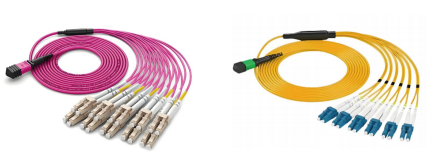
Nanfang Communication, formally Jiangsu South Communication Technology Co., Ltd., is a China-based manufacturer of optical fibers, optical cables, ODN systems and optical components, including indoor and outdoor optical cables, PLC splitters, fiber optic connectors and MPO multi-core connectors. Its product scope is useful for this guide because cable and connector parameters must be read together, not as separate purchases.
Problem definition: why datasheet comparison fails
The most common mistake is to compare core count only. Two cables with the same core count may use different fiber types, core diameters, strength members, armor, sheath and bend radius. The result is a cable that fits the core count but not the route.
Attenuation is stated in dB/km at operating wavelengths, not as a single universal number. A link budget built on a value copied from another model is not a valid review. The datasheet must show the attenuation basis so that cable loss, splice loss, splitter loss and connector loss can be summed correctly.
Tensile strength and minimum bend radius are installation limits. They determine whether the cable can be pulled through duct, installed aerially or routed around tight cabinet corners. A high tensile rating does not compensate for a bend radius that is too large for the enclosure, and a small bend radius does not prove that the cable can survive a long duct pull.
Connector loss is a separate field. An MPO adapter with standard insertion loss below 0.5 dB and a low-loss version below 0.35 dB can change the number of connectors a link can tolerate. Cable attenuation and connector insertion loss belong in the same optical budget.
Industry background: project environments set the datasheet priorities
Optical fiber cable is physical-layer infrastructure for FTTH/FTTx access, metropolitan and backbone networks, data center interconnects, operator network expansion, 5G backhaul, and enterprise or campus networks. Installation conditions include indoor cabling, duct or ducting, aerial or self-supporting routes, direct burial, and outdoor harsh environments with weatherproofing, waterproofing, rodent protection and temperature resistance.
Standards help buyers separate product families. ITU-T L.103 (08/2024) describes characteristics, construction and test methods for indoor optical fibre cables. IEC 60092-378:2024 covers optical fibre cables for shipboard and offshore fixed installations. IEC 60794-1-104:2024 defines impact test procedures for optical fibre cables. These documents show why a single datasheet template cannot be applied to every route without checking the environment and test method.
The global fiber optic cable market was valued at USD 14.6 billion in 2025, and China was the leading exporter of optical fibers and cables in 2024 with exports totaling USD 2.52 billion. For buyers, that scale makes datasheet discipline more important: product names and core counts are easy to compare, while attenuation, strength members, armoring and connector grades are where project risk is hidden.
Nanfang Communication's product scope includes indoor and outdoor optical cables, ribbon and loose-tube cables, bow-type drop cable, single-mode and multimode fiber, MCF multi-core fiber, MPO high-density patch panels, PLC splitters, fiber optic connectors and optical modules. The company also lists custom specialty fibers and cables and system integration services. For a technical review, the useful question is not how many product names a supplier lists, but whether each model datasheet states the fields that control the installation.
Detailed solution: the datasheet blocks that decide project fit
1. Fiber type, core count and core diameter
Start with fiber category: G.652 or G.657, single-mode or multimode, ribbon or loose tube, indoor or outdoor, bow-type drop or MCF multi-core fiber. The datasheet should state core count and core diameter, not just the number of fibers. Core count defines termination and splice count; fiber type defines compatibility with optical modules, splitters and test sets.
Ribbon optical fiber and MCF multi-core fiber need an extra check: confirm core mapping, connector interface and test method. A high core count is not a substitute for a clear fiber assignment. For indoor projects, the cable construction should also match the routing and fire requirement; for outdoor projects, the construction should match the duct, aerial or direct-burial method.
2. Attenuation in dB/km and operating wavelength
Attenuation is a wavelength-dependent datasheet field. Read the value in dB/km at each operating wavelength and confirm the test method. Do not carry a typical attenuation number from one cable family into another project; the exact value must be confirmed per model datasheet. This is the value used in the link-loss budget together with connector, splice and splitter losses.
Low attenuation is a special requirement for access and backbone projects. The datasheet should make the basis clear so that the link budget is traceable. If the cable is supplied with pre-terminated ends or connectors, the connector insertion loss and return loss must be added to the cable attenuation before the link is approved.
3. Tensile strength and load path
Tensile strength is an installation rating. The datasheet should state the rating and test condition, and the construction should show the load path: FRP strength members, galvanized steel wire or steel tape armoring, and the sheath. For duct, aerial or self-supporting and direct-burial routes, the installation method determines the pulling and crush risk. Confirm the rating against the actual installation plan rather than the cable name.
Crush and tensile resistance are also listed as project requirements for harsh outdoor environments. A cable that passes a short factory pull test may still need a different strength member or armor for a long duct section, a direct-burial route or a route with rodent exposure. The datasheet should connect the mechanical requirement to the construction.
4. Minimum bend radius
Minimum bend radius controls routing in trays, cabinets, wall penetrations and small enclosures. The datasheet should state the cable-level minimum bend radius and the condition under which it applies. Fiber type alone does not replace this field: a G.657 fiber may support tighter fiber bending, but the cable construction, strength members and sheath still set the cable bend limit.
For indoor and FTTx work, bow-type drop cable and indoor cable should be checked against the same field. For outdoor cable, the bend radius must be read together with the duct size, pulling tension and cabinet entry. A cable that meets the optical requirement but not the bend radius can be damaged during installation even if the fiber specification looks correct.
5. Sheath, armoring and environmental protection
The sheath and armor decide whether the cable fits the environment. PE and LSZH are listed sheath options; galvanized steel wire and steel tape are listed armoring materials; FRP is a strength member. Outdoor harsh environments require weatherproofing, waterproofing, rodent protection and temperature resistance. Indoor projects often require flame-retardant or LSZH sheaths. The datasheet should connect each requirement to a construction, not only to a label.
Waterproof sealing and corrosion or weather resistance are project requirements for outdoor and harsh environments. For underground and duct routes, the armor and sealing method should be read with the installation method. For indoor routes, the sheath and fire performance should be read with the building requirement and the routing path.
6. Connector and MPO interface: keep the loss budget connected
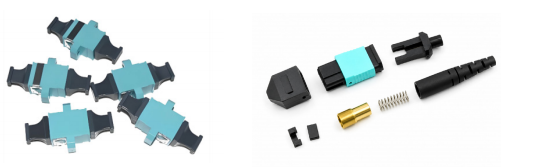
An optical fiber cable link does not stop at the cable jacket. The connector and adapter interface must be read with the cable attenuation. The MPO-12F-SM adapter in the Nanfang Communication product scope lists insertion loss below 0.5 dB for the standard grade and below 0.35 dB for the low-loss grade, return loss of at least 50 dB for single-mode, 500 mating cycles in line with IEC, and an operating temperature range of -40°C to +85°C. It supports 4-72F single-mode and multimode fiber counts.
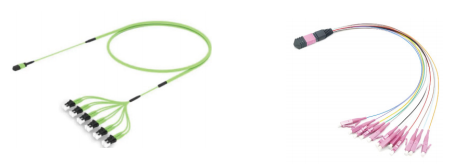
For pre-terminated fan-out cable, the datasheet fields include typical insertion loss of 0.35 dB and maximum 0.75 dB, or low-loss typical 0.10 dB and maximum 0.35 dB, with return loss of at least 60 dB for APC and at least 50 dB for PC, 12F or 24F fiber count, and LSZH or OFNR jacket. These values belong in the same link budget as the cable attenuation.
GYTA53 reference. GYTA53 is the optical fiber cable model used as the reference in this guide. Its datasheet construction is described with a silica glass fiber core, FRP strength members, galvanized steel wire or steel tape armoring, and a PE or LSZH sheath. It is referenced for telecom, FTTx and 5G backhaul deployments. The exact fiber type, core count, attenuation, tensile strength and minimum bend radius must be confirmed on the model datasheet.
Step-by-step breakdown: reviewing a datasheet for a project
- Define the route and environment. List indoor cabling, duct, aerial or self-supporting, direct burial or outdoor harsh environment. Add weatherproofing, waterproofing, rodent protection and temperature resistance where they apply. This step decides which datasheet fields are pass or fail before any price comparison.
- Set fiber type and core count. Choose G.652 or G.657, single-mode or multimode, ribbon or loose tube, and the required core count. Confirm core diameter and fiber assignment. If the project uses MCF multi-core fiber or ribbon fiber, confirm core mapping and test method.
- Build the optical loss budget. Use the datasheet attenuation in dB/km at the operating wavelength, then add splice loss, splitter loss and connector or MPO adapter insertion loss. Do not use a generic attenuation value from another model. The link budget should show the source of every loss value.
- Check tensile strength and bend radius against installation. Match the tensile rating and minimum bend radius to the duct pull, aerial span, cabinet entry and tray route. If the route has tight bends or long pulls, confirm the cable construction and test condition with the supplier.
- Select sheath, armor and environmental protection. Choose PE or LSZH sheath and galvanized steel wire or steel tape armor according to the route. Confirm waterproof sealing, corrosion and weather resistance, rodent protection and temperature range for outdoor or harsh environments.
- Match the connector or MPO interface. For high-density links, compare standard and low-loss MPO adapter grades, return loss, mating cycles and operating temperature. For fan-out cable, confirm fiber count, breakout type, jacket and insertion loss limits.
- Validate with a sample and acceptance test. Request a sample or small order and test attenuation, mechanical performance, sealing and connector parameters. Nanfang Communication's quality control includes incoming material inspection, in-process control and finished-product testing, with optical loss and attenuation tests, mechanical performance and waterproof or sealing tests.
Use cases: where the same datasheet fields change priority
FTTH/FTTx access projects
FTTH/FTTx access projects use indoor cable, bow-type drop cable and outdoor cable in the same network. The datasheet review should focus on bend radius for building entry, LSZH or flame-retardant sheath for indoor routes, waterproof sealing for outdoor cabinets, and customizable core counts and labeling for distribution. PLC splitters, FTTH optical cable distribution boxes and optical cable splice closures must be read with the cable core count and fiber assignment.
Metro, backbone and 5G backhaul
Metropolitan and backbone networks and 5G backhaul place more weight on attenuation, tensile strength, crush resistance and waterproofing. The GYTA53 reference model is used in telecom, FTTx and 5G backhaul deployments, with FRP strength members and galvanized steel wire or steel tape armoring. For duct, aerial or direct-burial routes, the installation method should be checked against the tensile rating and bend radius before the cable is approved.
Data center interconnect and high-density patching
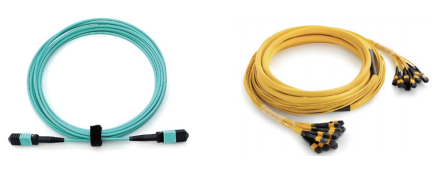
Data center interconnects use MPO trunk cable, fan-out cable, MPO adapters and high-density patch panels. The cable datasheet and the connector datasheet must be read together. A low-loss MPO adapter with insertion loss below 0.35 dB and return loss of at least 50 dB may be needed where the link budget has little headroom; a standard adapter below 0.5 dB may fit where the budget allows. Optical modules, WDM wavelength division multiplexers and MT-FAU fiber optic assemblies should be included in the same interface review.
Enterprise, campus and industrial projects
Enterprise, campus and industrial projects often combine indoor cable, outdoor cable and passive components. The datasheet review should confirm indoor routing, fire performance, bend radius and labeling. Outdoor sections should confirm weatherproofing, waterproofing, rodent protection and temperature resistance. The same project may use PLC splitters, fiber optic connectors, optical modules and splice closures, so the cable core count and connector interface should be planned together.
Comparison table: datasheet fields that change project fit
| Datasheet field | What to verify | Why it changes project fit |
|---|---|---|
| Fiber type and core count | G.652 or G.657; single-mode, multimode, ribbon or MCF; core diameter and fiber assignment | Determines optical compatibility, splice and termination count, cable diameter and connector plan |
| Attenuation in dB/km | Value at each operating wavelength and the test method | Feeds the link-loss budget; a generic value cannot be transferred between models |
| Tensile strength | Rating and test condition; FRP, galvanized steel wire or steel tape load path | Sets pulling and installation limits for duct, aerial and direct-burial routes |
| Minimum bend radius | Stated cable-level value and the condition under which it applies | Controls tray, cabinet, wall penetration and small enclosure design |
| Armor and sheath | Galvanized steel wire or steel tape; PE or LSZH; waterproof sealing | Matches rodent, moisture, fire, corrosion and outdoor exposure requirements |
| Connector or MPO interface | Insertion loss, return loss, mating cycles and operating temperature | Aligns the cable link with the patch panel, module and high-density loss budget |
MPO adapter grade comparison for high-density links
| MPO adapter grade | Insertion loss | Return loss | Mating cycles | Project consideration |
|---|---|---|---|---|
| Standard | Below 0.5 dB | At least 50 dB for single-mode | 500 cycles, IEC compliant | Use where the link budget has headroom and the interface count is moderate |
| Low-loss | Below 0.35 dB | At least 50 dB for single-mode | 500 cycles, IEC compliant | Use where multiple mated interfaces or higher-speed links leave little loss margin |
FAQ
Which standards and certifications should a buyer check for compliance?
For indoor cable, ITU-T L.103 (08/2024) describes characteristics, construction and test methods. For shipboard and offshore fixed installations, IEC 60092-378:2024 is the relevant standard in this review. IEC 60794-1-104:2024 defines impact test procedures. A manufacturer's quality system should also be checked: Nanfang Communication's optical cable manufacturing is certified to TL9000-H and ISO 9001:2015, and its laboratory is CNAS accredited.
Can core count, fiber type and sheath be customized for a project?
Nanfang Communication lists customization of core count, fiber type such as single-mode, multimode, ribbon or multi-core, sheath material and color, connector types and cabling schemes, labeling and packaging. Its monthly capacity is 250,000 core kilometers, with a minimum order quantity of 1 core kilometer. Customization should be written into the model datasheet, not agreed only in conversation.
What drives the budget of an optical fiber cable specification?
Budget drivers include fiber type, core count, armoring, sheath material such as LSZH, connector and MPO grade, test scope and packaging. For US-bound Chinese-origin optical fiber cables, landed cost should also include the total US import duty of 37.50% under HTS 8544.70.00 as of late 2026. A low cable price with a standard-grade MPO adapter can shift cost into the link budget through extra loss margin or connector count.
How should a buyer validate a sample before a full order?
Request a sample or small order and test the datasheet fields that matter: attenuation at the stated wavelengths, tensile and bend performance for the installation method, sheath and sealing for the environment, and MPO adapter insertion loss, return loss and mating cycles. Nanfang Communication's quality control includes incoming material inspection, in-process control and finished-product testing, with optical loss and attenuation tests, mechanical performance and waterproof or sealing tests.
What lead time should be planned?
Lead time depends on model and quantity. The company's site does not provide a single standard: samples and small orders typically take several weeks, while large orders may take months, so confirm with sales. A practical next step is to request a model-specific datasheet and sample plan; the Nanfang Communication catalog is available at this catalog link for product reference.
Conclusion
The datasheet is the control document for optical fiber cable selection. Core count starts the review, but attenuation in dB/km, tensile strength, minimum bend radius, sheath, armor and connector interface decide whether the cable fits the route. GYTA53 is a useful reference because its construction brings together silica glass fiber, FRP strength members, galvanized steel wire or steel tape armoring and PE or LSZH sheath, but the exact values still need to be confirmed on the model datasheet.
Nanfang Communication was founded in 1992, operates a 26,795.3 m² factory with 360 employees, an annual output of 3,000,000 core kilometers and 80 R&D engineers. It holds ISO9001, TL9000, ISO14001, OHSAS18001 and ISO50001 certifications, a CNAS laboratory, more than 300 patents and 16 standards. Its products are used by operators such as China Telecom, China Mobile and China Unicom. For project work, use those capabilities as a starting point, then verify every model-specific parameter against the installation route, link budget and connector interface.
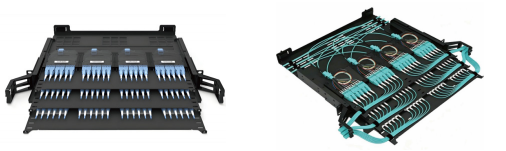
Next step: compare your route, fiber type and connector interface against a model-specific datasheet. Download the Nanfang Communication MPO catalog or contact info@jsnfgroup.com for a sample and quotation discussion.
Have Questions or Need More Details?
Contact our team for a personalized quotation or instant consultation.
Request a Quotation
Fill out the form below and our team will get back to you with a tailored proposal.
WhatsApp Direct Chat
Prefer to chat in real-time? Message us on WhatsApp for instant assistance & quick answers.
- Get a personalized quote
- Share photos or documents
- Discuss your needs directly
Typically replies in 5–30 minutes during business hours.