Inside an Optical Fiber Cable: Core, Strength Members, Armor, and Sheath Explained
An optical fiber cable is a layered assembly, not a single strand. A silica glass fiber carries the light, strength members carry the pulling and tensile loads, an armor layer resists crush, impact and rodent damage, and a polymer sheath seals the structure against water, weather and, where required, fire. Every deployment decision — duct, aerial, direct burial, indoor riser, FTTx access, 5G backhaul, data center interconnect — maps back to one of those four layers.
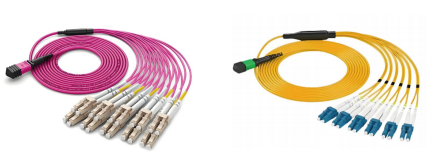
A finished optical cable assembly: the visible outer sheath is only the last of several functional layers built around the fiber.
This explainer works through each layer in turn, then uses the GYTA53 cable model from Nanfang Communication as a worked example of how a construction is written down on a datasheet. It also fixes the vocabulary buyers meet first: optical fiber, optical cable, and armored cable.
Optical fiber — the silica glass waveguide, made of a core and cladding, that carries an optical signal.
Optical cable — the installable product: fiber plus strength members, armoring where specified, and a sheath.
Armored cable — an optical cable whose construction includes a metallic armor layer; in the GYTA53 specification this is listed as galvanized steel wire or steel tape.
Problem Definition: Why Cable Anatomy Decides Project Fit
The practical problem this anatomy solves is specification drift. A buyer requests a 48-core single-mode cable, receives an offer, and compares it against a second offer that also reads 48-core single-mode — yet the two products may differ in every layer wrapped around the fiber. One may be built as a loose tube optical cable, another as a ribbon optical cable; one may add galvanized steel wire armoring, a second steel tape, a third none at all; one may be sealed with a PE sheath, another with an LSZH sheath.
Nanfang Communication's application data makes the reason explicit. Optical cable is expected to perform across indoor cabling, duct and ducting routes, aerial and self-supporting spans, and direct burial, as well as in outdoor harsh environments that demand weatherproofing, waterproofing, rodent protection and temperature resistance. Those are mechanical and environmental requirements. They are satisfied by layers, not by the fiber.
The same logic governs the datasheet. Core count, core diameter, attenuation in dB/km, operating wavelengths, tensile strength, minimum bend radius, sheath material and environmental ratings are all construction-level parameters, and the manufacturer states that exact specifications must be confirmed per model datasheet. Reading those parameters in the correct order — fiber first, then mechanical protection, then environmental sealing — is what turns a quotation into a comparable offer.
Industry Background: What Sits Around the Fiber
Optical fiber cable is the physical layer beneath most visible network investment: FTTx and broadband access, 5G backhaul, metropolitan and backbone transport, data center interconnect, and enterprise or campus cabling. Global Market Insights valued the global fiber optic cable market at USD 14.6 billion in 2025. Trade data published by the Observatory of Economic Complexity shows China as the leading exporter of optical fibers and cables in 2024, with exports of USD 2.52 billion under HS 854470.
Origin affects cost as well as logistics. Airlift USA reports that Chinese-origin optical fiber cables classified under HTS 8544.70.00 carried a total U.S. import duty of 37.50% as of late 2026. For a buyer comparing constructions, that means landed cost cannot be read from the cable anatomy alone — but the anatomy still determines whether the cheaper cable is the correct one for the route.
The standards environment reflects the same split between construction and environment. Recommendation ITU-T L.103 (08/2024) describes characteristics, construction and test methods for optical fibre cables for indoor applications. IEC 60092-378:2024 addresses optical fibre cables for shipboard and offshore fixed installations. IEC 60794-1-104:2024 defines the test procedure used to establish uniform requirements for impact performance. Each document anchors a different layer of the same question: what the cable is made of, and what it must survive.
Nanfang Communication (Jiangsu South Communication Technology Co., Ltd.) is an optical fiber cable and ODN manufacturer based in Changzhou, Jiangsu, China, and a subsidiary of the Hong Kong-listed South Communication Holdings Limited (1617.HK). The company was founded in 1992, operates a 26,795.3 m² facility with 360 employees and 80 R&D engineers, and reports an annual output of 3,000,000 core kilometers of cable. Its catalog spans optical fibers, optical cables, ODN systems and optical components, including indoor and outdoor optical cables, PLC splitters, fiber optic connectors and MPO multi-core connectors.
Detailed Solution: The Four Layers and What Each One Does
In the GYTA53 construction, the material list is short and specific: the core material is optical fiber in silica glass; the sheath is PE or LSZH; armoring is galvanized steel wire or steel tape; strength members are FRP. Four materials, four jobs.
1. The fiber: core and cladding
The fiber is the only layer that carries signal. It is drawn from silica glass and consists of a light-guiding core surrounded by cladding. For GYTA53, the parameter set names single-mode fiber types G.652 and G.657, and defines the transmission values a project must confirm: core count, core diameter, attenuation in dB/km and operating wavelengths. Fiber choices extend beyond that pair across the wider catalog, which also covers multimode fiber, ribbon optical fiber and MCF multi-core fiber — but for any specific order, the fiber type and its measured values are fixed by the model datasheet, not by the family name.
2. Strength members: FRP
Strength members exist because fiber tolerates very little strain. In the GYTA53 description, the strength member material is FRP. Its role is to absorb the tensile load applied during pulling, handling and aerial suspension so that the glass inside is not the component carrying that load. On a datasheet this layer appears as tensile strength — the value a contractor checks against the installation method, the duct length, the pulling tension planned, and, for self-supporting spans, the mechanical load of the route itself.
3. Armor: galvanized steel wire or steel tape
Armor is the layer that answers mechanical and biological threats rather than tensile ones: crush pressure in backfilled trenches, impact during installation, and rodent attack on buried routes. GYTA53 lists two options, galvanized steel wire and steel tape. The choice changes stiffness, bend behaviour and handling, which is why the same fiber count can feel like a different product on site. It is also why minimum bend radius and environmental rating must be read together with the armor type, not separately.
4. Sheath: PE or LSZH
The sheath is the environmental boundary. GYTA53 is offered with PE or LSZH sheathing, and the application requirements behind those options are listed as low attenuation, low insertion loss, flame-retardant or LSZH sheaths, waterproof sealing, crush and tensile resistance, corrosion and weather resistance, plus customizable core counts and labeling. A PE sheath addresses outdoor moisture and weather exposure; an LSZH sheath addresses flame-retardant and low-smoke requirements where cable enters buildings and other occupied spaces. Neither substitutes for the other, and the sheath callout on a purchase order should be explicit.
5. How the layers combine into a cable family
The same four layers are packed differently depending on the family. A loose tube optical cable encloses fibers in tubes inside the cable core; a ribbon optical cable organizes fibers as flat ribbons for mass splicing; a bow-type drop optical cable is built for short subscriber drops; indoor and outdoor optical cables differ in sheath and armor choices. The layer logic does not change — only the packing and the protection level do.
Layer-by-layer reference for a GYTA53-style construction
| Layer | Material in the GYTA53 description | Function on site | Datasheet values to confirm |
|---|---|---|---|
| Fiber (core and cladding) | Optical fiber, silica glass; single-mode G.652 / G.657 named in the parameter set | Carries the optical signal | Fiber type, core count, core diameter, attenuation (dB/km), operating wavelengths |
| Strength member | FRP | Carries tensile load during pulling and suspension | Tensile strength |
| Armor | Galvanized steel wire or steel tape | Resists crush, impact and rodent damage on buried and harsh routes | Armor type, minimum bend radius, environmental rating |
| Sheath | PE or LSZH | Seals against water, weather and, where specified, fire and smoke | Sheath material, environmental rating, flame-retardant requirement |
| Overall assembly | Loose tube, ribbon, bow-type drop, indoor or outdoor family | Defines fiber packing, splicing strategy and handling behaviour | Exact model datasheet, labeling and packing requirements |
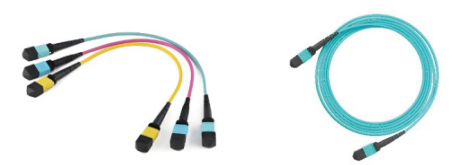
Where a cable ends, the construction meets connector hardware — the termination type is specified separately from the cable build.
Step-by-Step Breakdown: Reading a GYTA53 Datasheet in Order
The following sequence follows the physical structure of the cable, from the light outwards. It is the order in which a buyer can compare two offers line by line.
Step 1 — Fiber type and core count. Confirm whether the cable is specified with G.652 or G.657 single-mode fiber, and the exact core count required by the link budget and the splice plan. Core count also drives the customization and packing options, since core counts are listed as configurable.
Step 2 — Core diameter and transmission parameters. Core diameter, attenuation in dB/km and operating wavelengths belong together: they define the optical budget the cable contributes to the link. Confirm all three against the model datasheet rather than against the family description.
Step 3 — Tensile strength. Match the tensile rating to the installation method: pulling through duct, aerial self-supporting spans and direct burial each load the cable differently. Tensile strength is a cable-level value produced by the strength member and armor combination, not by the fiber.
Step 4 — Minimum bend radius. Bend radius governs handling at handholes, cabinets and splice closures. It should be checked together with the armor choice, since steel tape and steel wire constructions behave differently when bent.
Step 5 — Sheath material and environmental rating. Decide PE versus LSZH against the route: outdoor duct and burial conditions on one side, indoor cabling and flame-retardant requirements on the other. Confirm the environmental rating — including waterproof sealing, crush resistance, corrosion resistance and temperature range — on the datasheet for the specific model.
Step 6 — Customization and identification. Core counts, sheath material and color, connector types and cabling schemes, and labeling and packaging are listed as customizable. For multi-site projects, labeling and packing are often the difference between a clean installation and a sorting problem in the warehouse.
Step 7 — Close the loop with the model datasheet. Because the manufacturer states that exact specifications must be confirmed per model, the last action in the sequence is not optional: obtain the datasheet for the exact model and revision being quoted, and attach it to the purchase order.
Quality evidence behind the datasheet. Nanfang Communication operates a quality system that includes incoming material inspection, in-process control and finished-product testing — optical loss and attenuation tests, mechanical performance checks, and waterproof and sealing tests — supported by laboratory testing capability. The company holds a CNAS laboratory accreditation and its optical cable manufacturing is certified to TL9000-H and ISO 9001:2015.
Use Cases: Which Layer Matters Where
Optical cable in these constructions is applied to FTTx and broadband access projects, metropolitan and backbone network projects, data center interconnects, operator network expansion and 5G backhaul projects, and enterprise or campus network deployments. In each case one or two layers carry the risk.
- FTTx and broadband access. Short drop and distribution routes stress bend radius and handling more than long-haul attenuation; bow-type drop optical cable and small-core-count constructions are the natural fit, with splice closures and FTTH optical cable distribution boxes as the matched accessories.
- Metropolitan and backbone networks. Higher core counts, ribbon constructions for mass splicing, and attenuation consistency across the span dominate; the strength member and armor decide how the cable survives duct pulls between chambers.
- 5G backhaul. Routes combine aerial and buried sections, so tensile strength and crush resistance are checked together, and the environmental rating must cover the harshest segment rather than the average.
- Data center interconnect. Once the cable reaches the building, the construction interfaces with MPO high-density patch panels, MT-FAU fiber optic assemblies, WDM wavelength division multiplexers and optical modules; indoor cable with LSZH sheath is the relevant choice inside the hall.
- Industrial, smart city and campus routes. Direct burial and harsh outdoor conditions call for armoring, waterproof sealing and rodent protection, with corrosion and weather resistance confirmed on the datasheet.
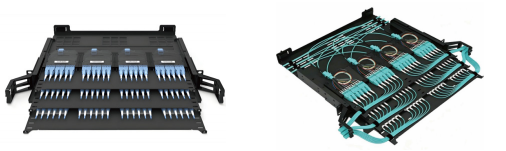
The end point of the anatomy: cable, connector and patch panel are specified as one chain, not as separate purchases.
Comparison Table: Standards and Certifications Around the Construction
| Reference | Scope | What it tells a buyer |
|---|---|---|
| ITU-T L.103 (08/2024) | Optical fibre cables for indoor applications | Baseline for characteristics, construction and test methods for indoor cable |
| IEC 60092-378:2024 | Optical fibre cables for shipboard and offshore fixed installations | Application-specific reference for marine and offshore environments |
| IEC 60794-1-104:2024 | Impact test procedure (test method E4) | Mechanical qualification reference for the armor-protected layers |
| TL9000-H and ISO 9001:2015 (Nanfang Communication) | Telecom and general quality management systems | Evidence that the datasheet values come from a controlled production and test process |
| CNAS laboratory accreditation (Nanfang Communication) | In-house testing capability | Attenuation, mechanical and sealing test data can be produced in-house |
FAQ
Which standards and certifications should an optical fiber cable buyer check?
The applicable standard depends on where the cable is installed. ITU-T L.103 (08/2024) describes characteristics, construction and test methods for optical fibre cables for indoor applications; IEC 60092-378:2024 covers optical fibre cables for shipboard and offshore fixed installations; and IEC 60794-1-104:2024 defines the impact test procedure used to establish uniform impact-performance requirements. On the supplier side, Nanfang Communication's optical cable manufacturing is certified to TL9000-H and ISO 9001:2015, and the company also holds ISO 14001, OHSAS 18001 and ISO 50001 system certifications plus a CNAS laboratory accreditation. Match each purchase to the standard for its installation environment and ask for the model datasheet.
How do I choose a cable construction for duct, aerial, or direct burial?
Choose by the loads the route applies, not by the fiber count. In the GYTA53 description, tensile load is handled by FRP strength members, crush, impact and rodent exposure by galvanized steel wire or steel tape armoring, and moisture and weather by a PE or LSZH sheath. Nanfang Communication lists duct and ducting installation, aerial and self-supporting spans, direct burial, indoor cabling and outdoor harsh environments among the working conditions optical cable is expected to serve, with requirements including waterproof sealing, crush and tensile resistance, rodent protection, corrosion and weather resistance, and temperature resistance. Confirm the actual rating for the exact model on its datasheet before ordering.
What drives the cost of an optical fiber cable?
Cost is driven by the construction layers and the configuration, not by the fiber alone. Listed customization variables are core count, fiber type (single-mode, multimode, ribbon or multi-core), sheath material and color, connector types and cabling schemes, and labeling and packaging — each of which changes material content and production handling. Origin and tariff treatment also change landed cost: Airlift USA reports that Chinese-origin optical fiber cables under HTS 8544.70.00 carried a total U.S. import duty of 37.50% as of late 2026, so the same construction can land at a materially different price depending on the shipping origin.
What is the minimum order quantity, and can I validate a sample first?
For Nanfang Communication, the minimum order quantity is 1 core kilometer. Because core count, fiber type, sheath material and color, connector types and cabling schemes, and labeling and packaging are all customizable, a sample or small trial order is the practical way to validate the sheath callout, the labeling convention and the drum packing before a full order is released. Sample and small-order schedules are quoted against the specific model rather than held as a fixed standard.
How long is the lead time for an optical fiber cable order?
There is no single standard lead time. Nanfang Communication states that lead time depends on model and quantity: samples and small orders typically take several weeks, while large orders may take months, and the confirmed schedule should be obtained from sales for the specific configuration. Production capacity supporting that schedule is reported at 250,000 core kilometers per month, equivalent to an annual output of 3,000,000 core kilometers. To move from anatomy to a concrete offer, send the required core count, fiber type, sheath and armor choice, and labeling requirements through Nanfang Communication (info@jsnfgroup.com, +86 51988792646) and request a sample or quotation against the model datasheet.
Conclusion
An optical fiber cable is a sequence of decisions stacked around a glass waveguide. The fiber decides the optical budget; the FRP strength member decides how much pulling and suspension the cable survives; the galvanized steel wire or steel tape armor decides how it behaves under crush, impact and rodent exposure; and the PE or LSZH sheath decides what environment it can enter. GYTA53 shows how plainly this can be documented — four materials, plus a parameter set covering fiber type, core count, core diameter, attenuation, operating wavelengths, tensile strength, minimum bend radius, sheath material and environmental ratings.
The buyer's task is not to memorize the anatomy but to read it in the right order, project by project: fiber and core count first, tensile and bend limits second, sheath and environmental rating last, all confirmed against the exact model datasheet. A cable that matches the route on all four layers is a specification. A cable that matches only the fiber count is a risk that gets buried.
Next step: specify the layers, then validate them
Request a GYTA53 sample or quotation with your core count, fiber type, armor and sheath requirements, and labeling instructions. The product catalog is available for download, and technical support covers construction matching, cabling schemes and datasheet confirmation.
Download the Nanfang Communication product catalog (PDF) | Visit jsnfgroup.com

Nanfang Communication — founded 1992, Changzhou, Jiangsu; annual output 3,000,000 core kilometers.
Have Questions or Need More Details?
Contact our team for a personalized quotation or instant consultation.
Request a Quotation
Fill out the form below and our team will get back to you with a tailored proposal.
WhatsApp Direct Chat
Prefer to chat in real-time? Message us on WhatsApp for instant assistance & quick answers.
- Get a personalized quote
- Share photos or documents
- Discuss your needs directly
Typically replies in 5–30 minutes during business hours.