
Partnering for Success: Key FAQs on MPO Testing and Pre-Terminated Cabling
Supplier Partnership Guide · MPO Testing & Pre-Terminated Cabling
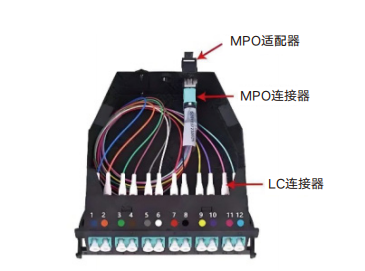
A pre-terminated MPO link is decided before it reaches the rack. Insertion loss, return loss, mating durability and polarity are all set at the factory, which means every serious question a buyer asks a supplier is really a constraint question: which parameters are fixed, who can verify them, and whether the partnership holds up after the first purchase order. This article answers the questions buyers actually raise when evaluating an MPO testing and pre-terminated cabling partner, using only the manufacturer's published specifications and certificates.
Most procurement teams arrive at this evaluation stage having already compared product categories. What they still need is a defensible paper trail: a loss tier that matches the link budget, a test scope that covers the specific assembly, a certificate that can be checked by number, and a commercial structure that does not change between the sample and the shipment. The sections below work through those in order.
Why MPO Buyers Are Really Asking Constraint Questions
Once a factory terminates a 12-fiber or 24-fiber connector, the buyer's optical budget is already fixed by that termination. The field cannot recover insertion loss that was built in at the factory, and it cannot repair a polarity error without re-terminating the assembly. That single fact explains why experienced buyers stop asking what a supplier can make and start asking four constraint questions instead.
- Parameter constraints. Standard-loss versus low-loss is a purchasing decision made on paper, not a manufacturing afterthought. It has to be settled before the order is released.
- Evidence constraints. A claim that a product is tested only carries weight when the test covers the specific component and can be issued as a document the buyer can file.
- Compliance constraints. A certificate is useful only when the certificate number, the issuing body, the scope and the validity date can all be checked independently.
- Continuity constraints. The distance between a validated sample and a production lot is where most supplier relationships break, and it is the least frequently asked question in the evaluation phase.
The five FAQ answers further down map directly onto these constraints, plus the question buyers usually leave until too late: what the supplier does after the first purchase order is delivered.
Why High-Density MPO Cabling Turned a Cable Question Into a Test Question
Optical fiber cable was traditionally judged as a structural product — sheath, armoring, tensile performance, bend radius. High-density MPO cabling is judged optically instead. In a 12-fiber connector, a single poorly polished endface or a mis-keyed ferrule can compromise the entire link, and the failure appears at commissioning rather than at goods-in.
That shift has made standards and laboratory evidence the practical reference points for buyers:
- ITU-T L.103 (08/2024) describes characteristics, construction and test methods for optical fibre cables for indoor applications — the standard family that governs the indoor portion of most enterprise and data center runs.
- IEC 60794-1-104:2024 defines test procedures used to establish uniform requirements for the impact performance of optical fibre cables, which is the kind of mechanical method buyers reference when a route passes through high-risk areas.
- TL9000 is the telecommunications quality management system standard that operators and their suppliers commonly work to. Nanfang Communication holds a TL9000-H certificate for the manufacture and sales of communication optical fiber cable.
- ISO/IEC 17025:2017 laboratory accreditation allows a buyer to audit the competence and scope of the laboratory behind a test report, rather than accepting a generic statement that testing is performed in-house.
The supply base is not the constraint. Global Market Insights, in a 2026 report, valued the global fiber optic cable market at USD 14.6 billion in 2025, which describes a market with ample capacity and no shortage of sellers. Differentiation therefore sits in the parameters and the evidence, not in availability. For a buyer evaluating partners in 2026, the question is no longer whether a supplier can produce the assembly — it is what the supplier can prove about it.
How Nanfang Communication Maps Parameters, Certificates and Support
Nanfang Communication (Jiangsu South Communication Technology Co., Ltd.) is a fiber optic cable and optical component manufacturer based in Changzhou, Jiangsu Province, China, and a subsidiary of the Hong Kong-listed South Communication Holdings Limited (Stock Code: 1617.HK). Founded in 1992, the company manufactures optical fiber cable, ODN systems and optical components including indoor and outdoor optical cables, PLC splitters, fiber optic connectors, MPO multi-core connectors and optical modules, and also supplies custom specialty fibers and cables plus system integration services.
Parameter layer: what is fixed at the factory
The MPO-12F-SM is a single-mode MPO fiber optic adapter built from a ceramic ferrule, a plastic housing and a metal flange. Standard insertion loss is below 0.5 dB and low-loss insertion loss is below 0.35 dB, with return loss of at least 50 dB in single mode. Mating cycles are rated at 500 cycles in compliance with IEC standards, and the operating temperature range is −40 °C to +85 °C. Fiber count spans 4 to 72 fibers across single-mode and multimode, with black (flange with ears), aqua (OM3) and violet (OM4) housing colors.
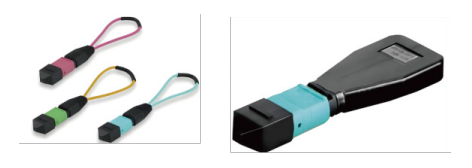
For link testing, the MPO/MTP loopback is available as MPO-12F-Loopback and MPO-24F-Loopback. Low-loss insertion loss is ≤0.7 dB for 8F and 12F configurations and ≤1.0 dB for 24F. Return loss is ≥65 dB in single mode and ≥25 dB in multimode, across OS2, OM1, OM2, OM3, OM4 and OM5 fiber types. Mating cycles are rated at ≥100,000 and the stated link failure rate is below 0.1%.
Pre-terminated breakout assemblies carry their own numbers. The MTP/MPO fan-out pre-terminated cable, models MTP-12F-to-6xLC-Duplex and MTP-24F-to-12xLC-Duplex, is specified at a typical insertion loss of 0.35 dB and a maximum of 0.75 dB, or 0.10 dB typical and 0.35 dB maximum in the low-loss variant. Return loss is ≥60 dB for APC and ≥50 dB for PC, with 12-fiber or 24-fiber counts, LC or SC duplex or quad breakout, and LSZH or OFNR jacket options.
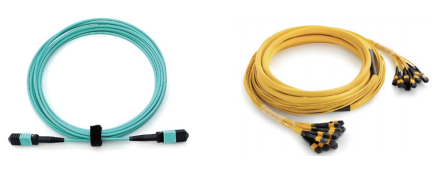
Behind the assemblies sits the cable itself. Optical fiber cable construction uses silica glass as the core material, FRP and other strength members, galvanized steel wire or steel tape for armoring where required, and PE or LSZH sheath options. Common fiber types are G.652 and G.657, with core count, core diameter, tensile strength ratings, minimum bend radius and attenuation in dB/km specified per model datasheet.
Evidence layer: who performs the testing
Nanfang Communication operates a laboratory accredited to ISO/IEC 17025:2017 by the China National Accreditation Service for Conformity Assessment, under accreditation certificate number CNAS L11717. The accreditation covers testing and calibration of optical fiber cable and optical communication components, and applies to both the China and global markets. The certificate was issued on 30 November 2024 and is valid to 29 November 2030.
That scope matters for a cabling buyer because it defines what can be evidenced independently: cable-level optical and mechanical testing, and component-level verification for items such as MPO adapters and loopbacks. It is a different class of proof from a supplier statement that products are inspected before shipment.
Compliance layer: certificates with checkable numbers
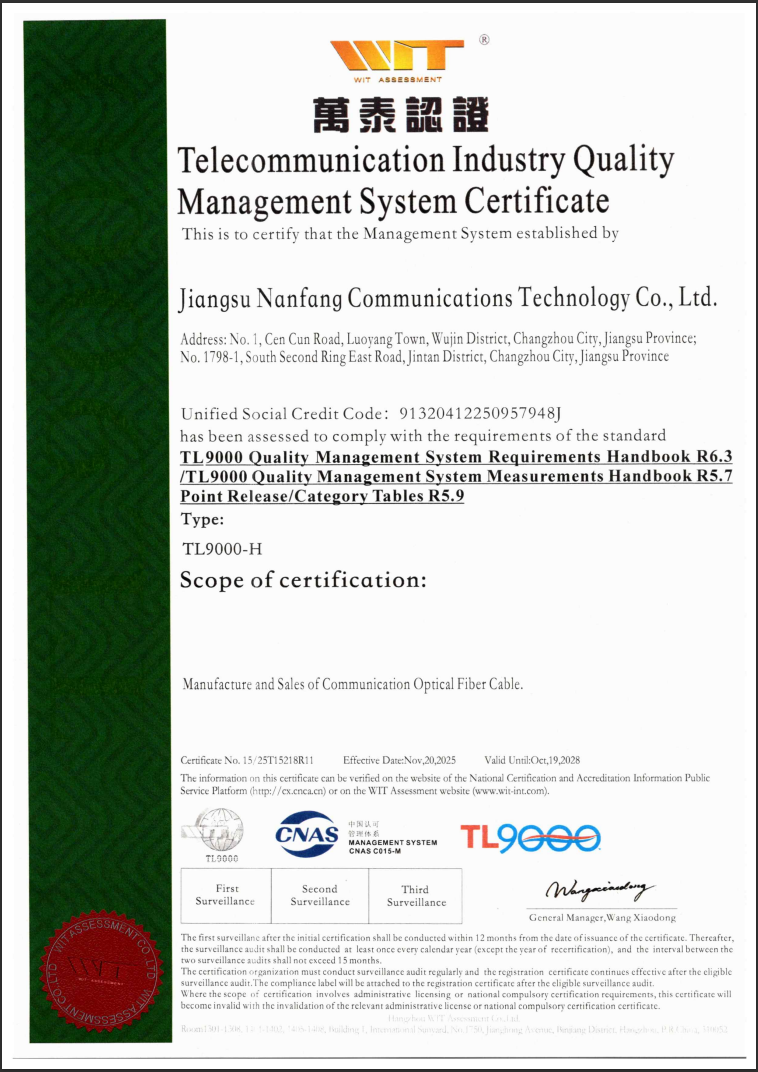
The TL9000-H certificate held by Nanfang Communication is numbered 15/25T15218R11 and was issued by WIT Assessment / Hangzhou WIT Assessment Co., Ltd. against the TL9000 Quality Management System Requirements Handbook R6.3, the TL9000 Quality Management System Measurements Handbook R5.7 point release and the Category Tables R5.9. It was issued on 20 November 2025 and remains valid to 19 October 2028. The published certificate scope is the manufacture and sales of communication optical fiber cable.
Environmental and occupational health and safety management are certified separately. ISO 14001:2015 is held under certificate number 62225E20719R0M, and ISO 45001:2018 under certificate number 62225S20720R0M; both were issued by SWR Certification (Jiangsu) Co., Ltd., are valid to 19 December 2028, and cover the production of communication optical cables, optical fibers, and communication distribution equipment including ODF, cross connection cabinets, outdoor cabinets for communication systems, fiber distribution boxes, network cabinets for data equipment and fiber termination. The company also holds ISO 9001 quality management system certification.
How to read these certificates as a buyer: the certificate number, the issuing body, the standard revision and the validity dates are the four fields that survive an audit. When a supplier quotes a certificate in a tender response, ask for exactly those four fields, plus the scope statement, and confirm that the product you are ordering falls inside the stated scope.
Support layer: what sits behind the shipment
Manufacturing scale is published as 250,000 core kilometers per month within an annual output of 3,000,000 core kilometers, supported by a site of 26,795.3 m² and 360 employees, including 80 R&D engineers. Minimum order quantity for optical fiber cable is 1 core kilometer. Customization covers core count, fiber type (single-mode, multimode, ribbon or multi-core), sheath material and color, connector types and cabling schemes, labeling and packaging.
On service, the company maintains 28 provincial-level offices across China, providing localized sales, technical support and after-sales service, and has long-standing cooperative relationships with operators including China Telecom, China Mobile, China Unicom and China Broadcast Network, as well as private network users in high-speed rail, power grid and chemical industries. Response times and warranty terms are confirmed case by case with the company rather than published as a fixed standard.
Five Steps to Evaluate a Pre-Terminated MPO Partner
- Fix the link budget before you fix the loss grade. Calculate the worst-case path using the maximum insertion loss figures, not the typical ones. For a fan-out assembly that means 0.75 dB standard or 0.35 dB low-loss as the planning figure, while the 0.35 dB and 0.10 dB figures describe typical production. Choosing a grade against typical values is the most common cause of a link that tests badly at commissioning.
- Map test evidence to the exact component. A loopback, an adapter and a breakout assembly each carry different specifications and different test purposes. Confirm which of them the supplier's test documentation actually covers, and whether the loopback used for channel validation matches the fiber count and polish geometry of the link under test.
- Check the laboratory scope, not just the logo. Ask for the accreditation number and the scope statement. CNAS L11717 covers testing and calibration of optical fiber cable and optical communication components — which is the specific language to look for, rather than a general claim of in-house testing.
- Verify management system certificates by number. Confirm the TL9000-H certificate 15/25T15218R11 with WIT Assessment, and the ISO 14001:2015 and ISO 45001:2018 certificates 62225E20719R0M and 62225S20720R0M with SWR Certification (Jiangsu) Co., Ltd., against the stated validity periods.
- Close the commercial terms during sampling, not after. Agree MOQ, customization scope, labeling and packaging, and the lead time for the specific model and quantity while the sample is still under review. The published position is that lead time depends on model and quantity — samples and small orders typically take several weeks, while large orders may take months — so a written confirmation at sampling stage avoids a renegotiation later.
Where These Assemblies Are Used
Data center cabinet interconnection
The MTP/MPO fan-out pre-terminated cable is specified for cabinet-to-cabinet interconnection and for 40G, 100G and 400G SR4 and PSM4 module connection, with 12-fiber or 24-fiber trunks breaking out to LC or SC duplex or quad connectors. Specifying low-loss variants is a function of how many mated pairs sit in the channel, not of project size.
Commissioning and equipment validation
MPO/MTP loopbacks are used in network testing, data center commissioning and equipment validation. The relevant parameters are insertion loss at the tested fiber count and the mating cycle rating, because a loopback is a consumable in a busy commissioning schedule rather than a permanent installation.
High-density patching
The MPO-12F-SM adapter is used in data centers, telecom networks and high-density cabling systems where 4 to 72 fiber single-mode or multimode connections are consolidated. Housing color functions as a visual mode identifier: aqua for OM3, violet for OM4, black with a flanged ear for standard applications.
Access and transport networks
Optical fiber cable in this portfolio serves telecom operators, ISPs and data centers, FTTx and broadband access, enterprise campuses, industrial and smart city projects, and 5G backhaul and metropolitan backbone networks, with indoor, outdoor, ribbon, loose-tube and bow-type drop constructions available according to route and environment.
Component Comparison: Adapter, Loopback and Fan-Out Cable
The three components most often quoted together in an MPO testing and pre-terminated cabling package are not interchangeable, and their specifications should not be pooled into a single loss figure.
| Attribute | MPO-12F-SM Adapter | MPO/MTP Loopback (12F / 24F) | MTP/MPO Fan-out Pre-terminated Cable |
|---|---|---|---|
| Role in the network | Couples two MPO connectors in patch panels and cassettes | Creates a test loop for channel and equipment validation | Connects an MPO trunk to LC/SC duplex or quad ports |
| Insertion loss | Standard <0.5 dB; low-loss <0.35 dB | Low-loss ≤0.7 dB (8F/12F); ≤1.0 dB (24F) | Typical 0.35 dB, max 0.75 dB; low-loss typical 0.10 dB, max 0.35 dB |
| Return loss | ≥50 dB (SM) | ≥65 dB (SM); ≥25 dB (MM) | ≥60 dB (APC); ≥50 dB (PC) |
| Fiber count | 4–72F, single-mode and multimode | 8F, 12F or 24F | 12F or 24F |
| Mating cycles | 500 cycles (IEC compliant) | ≥100,000 | — |
| Operating temperature | −40 °C to +85 °C | — | — |
| Construction | Ceramic ferrule, plastic housing, metal flange | Ceramic/MTP ferrule, plastic housing, fiber cable | OS2/G.657A or OM3/OM4/OM5 fiber, ceramic ferrule, LSZH/OFNR jacket |
| Stated application | Data centers, telecom networks, high-density cabling | Network testing, data center commissioning, equipment validation | Cabinet interconnection, 40G/100G/400G SR4/PSM4 module connection |
Read the table as three separate budgets. The adapter contributes its loss once per mated pair; the fan-out cable contributes a fixed factory termination loss; the loopback is test equipment and its insertion loss affects the measurement, not the installed link. Adding all three into one figure overstates the installed loss and usually leads buyers to over-specify a loss grade they do not need.
Frequently Asked Questions
1. Which standards and certificates should an MPO adapter or loopback order be checked against?
Three separate things need to be verified. First, the product-level parameters: the MPO-12F-SM adapter is rated at 500 mating cycles in compliance with IEC standards, with standard insertion loss below 0.5 dB, low-loss below 0.35 dB and single-mode return loss of at least 50 dB. Second, the management system certificates: Nanfang Communication holds TL9000-H certificate 15/25T15218R11 issued by WIT Assessment for the manufacture and sales of communication optical fiber cable, plus ISO 14001:2015 certificate 62225E20719R0M and ISO 45001:2018 certificate 62225S20720R0M issued by SWR Certification (Jiangsu) Co., Ltd., and ISO 9001 certification. Third, the laboratory behind the test data: accreditation CNAS L11717 to ISO/IEC 17025:2017, covering testing and calibration of optical fiber cable and optical communication components.
2. What does “tested before shipment” actually cover in an MPO program?
It should cover three distinct layers. At cable level, the quality management system covers incoming material inspection, in-process control and finished-product testing, including optical loss and attenuation tests, mechanical performance, and waterproof and sealing tests, supported by the accredited laboratory. At component level, published parameters define what is being verified — for example, loopback low-loss insertion loss of ≤0.7 dB at 8F/12F and ≤1.0 dB at 24F, return loss of ≥65 dB single-mode and ≥25 dB multimode, and a stated link failure rate below 0.1%. At assembly level, the fan-out cable carries a typical insertion loss of 0.35 dB and a maximum of 0.75 dB in standard grade. A supplier claim is only usable if it maps to one of these three layers and can be issued as a document.
3. Where does the cost difference between standard-loss and low-loss parts come from, and when is low-loss unnecessary?
The difference is concentrated in a narrow set of parameters rather than in the housing or the connector body. On the MPO-12F-SM adapter, moving from standard to low-loss reduces insertion loss from below 0.5 dB to below 0.35 dB. On the MTP/MPO fan-out pre-terminated cable, standard grade is 0.35 dB typical and 0.75 dB maximum, while low-loss grade is 0.10 dB typical and 0.35 dB maximum. The practical rule is to build the link budget from the maximum figures: if the channel still passes with a 0.75 dB maximum fan-out and a 0.5 dB adapter, standard grade is sufficient, and low-loss can be reserved for channels with multiple mated pairs or long cascades. Specifying low-loss against typical-value budgets is a common source of unnecessary cost, and specifying standard grade against maximum-value budgets that barely pass is a common source of commissioning failures.
4. Can we validate samples before committing to a framework order, and how long does that take?
Yes, sampling is part of the stated working model. The minimum order quantity for optical fiber cable is 1 core kilometer, and customization is available across core count, fiber type including single-mode, multimode, ribbon and multi-core, sheath material and color, connector types and cabling schemes, labeling and packaging. Lead time depends on the model and quantity rather than following one fixed standard: samples and small orders typically take several weeks, and large orders may take months. The correct approach is to confirm the lead time for the exact model and quantity with sales while the sample is under evaluation, and to record that confirmation alongside the approved sample parameters.
5. Once we move to volume supply, what supports the relationship over the long term?
Three things are visible before any commitment. Capacity: 250,000 core kilometers per month within an annual output of 3,000,000 core kilometers, from a 26,795.3 m² facility with 360 employees and 80 R&D engineers. Service footprint: 28 provincial-level offices across China providing localized sales, technical support and after-sales service, with long-standing operator relationships including China Telecom, China Mobile, China Unicom and China Broadcast Network, and private network users in high-speed rail, power grid and chemical industries. Governance: a certificate set that can be re-verified each year — TL9000-H 15/25T15218R11 valid to 19 October 2028, ISO 14001:2015 62225E20719R0M and ISO 45001:2018 62225S20720R0M valid to 19 December 2028, and CNAS L11717 valid to 29 November 2030. To take the next step, send the assembly list and target parameters to info@jsnfgroup.com or request the MPO catalogue from the link at the end of this article.
Conclusion: Partnership Is a Paper Trail, Not a Price List
Pre-terminated MPO cabling rewards buyers who decide on constraints rather than on impressions. The parameters are already published — standard and low-loss insertion loss, return loss, mating cycles and temperature range for the adapter; loopback loss by fiber count and a stated link failure rate; typical and maximum insertion loss for fan-out assemblies. The evidence is already documented — a laboratory accredited to ISO/IEC 17025:2017 under CNAS L11717, with a defined scope covering optical fiber cable and optical communication components. The compliance record is already numbered — TL9000-H 15/25T15218R11, ISO 14001:2015 62225E20719R0M and ISO 45001:2018 62225S20720R0M, each with an issuer and a validity date.
What remains is for the buyer to check those records against the actual order. A supplier that publishes the numbers, keeps the certificates current and confirms lead time in writing at sampling stage is easier to audit and easier to keep. That is the practical definition of a long-term partner in this category, and it is measureable before the first purchase order is released.
Request the MPO Catalogue or Discuss a Partnership

Download the full MPO product catalogue, including adapters, loopbacks, fan-out and trunk assemblies, to review the specifications referenced in this article: Nanfang Communication MPO Catalogue (PDF).
Partnership and quotation enquiries: info@jsnfgroup.com · Tel +86 51988792646 · WhatsApp +8619850287785 · jsnfgroup.com
Address: Nanfang Communication, Jintan District, Changzhou City, Jiangsu Province, China.
Have Questions or Need More Details?
Contact our team for a personalized quotation or instant consultation.
Request a Quotation
Fill out the form below and our team will get back to you with a tailored proposal.
WhatsApp Direct Chat
Prefer to chat in real-time? Message us on WhatsApp for instant assistance & quick answers.
- Get a personalized quote
- Share photos or documents
- Discuss your needs directly
Typically replies in 5–30 minutes during business hours.