How to Verify Optical Fiber Cable Certifications and Specifications
How to Verify Optical Fiber Cable Certifications and Specifications
When procuring optical fiber cables for telecom, FTTH, or data center projects, buyers in the research-to-evaluation stage need a reliable method to validate product compliance and performance. This guide explains the key certifications, parameters, and quality benchmarks that define a trustworthy optical fiber cable supplier, using Nanfang Communication as a case example.
Why Certifications and Specifications Matter
Global optical fiber cable market reached approximately USD 13.45 billion in 2025, with China exporting USD 2.52 billion worth of cables in 2024 (Custom Market Insights, OEC). With such scale, buyers must differentiate between suppliers based on verifiable quality standards. Certifications like TL9000 and ISO 14001 demonstrate a manufacturer's commitment to consistent quality and environmental management. Product specifications such as insertion loss and fiber type directly affect network performance.
Key Certifications for Optical Fiber Cables
Nanfang Communication holds multiple certifications that cover its optical fiber cable (model GYTA53) and associated components:
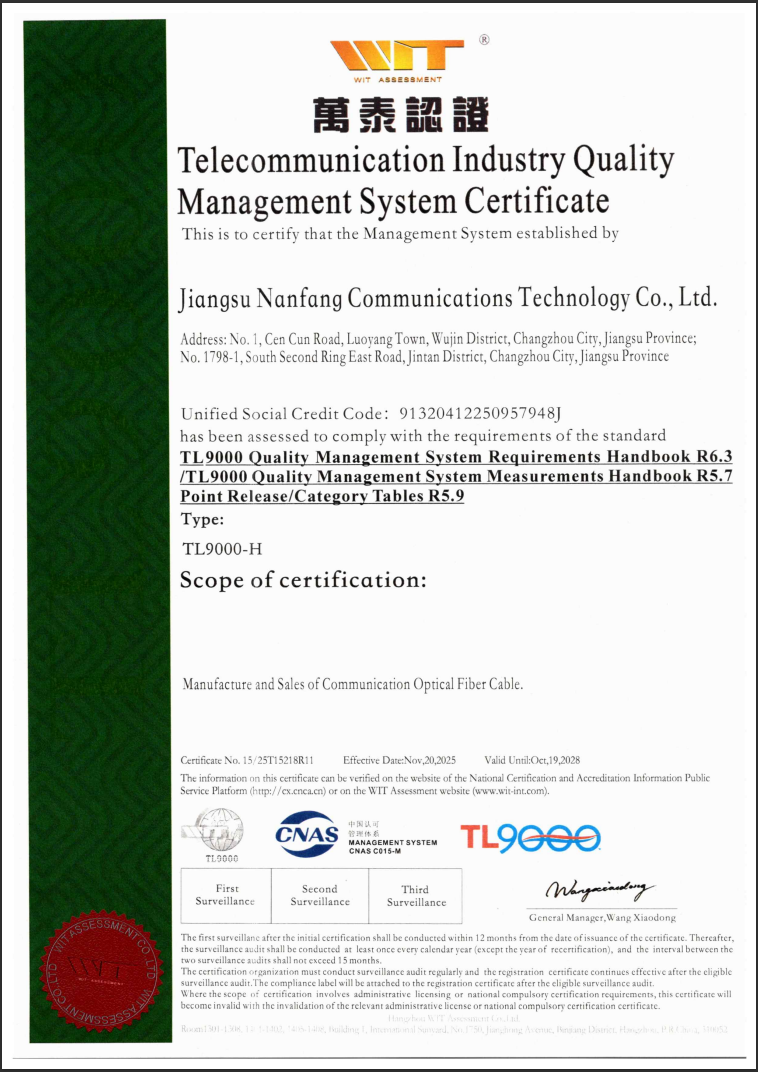
- TL9000-H – The optical fiber cable (model GYTA53) is certified to TL9000-H, the telecommunications industry quality management standard (fact 114079). This certification ensures rigorous quality processes for telecom products.
- ISO 14001:2015 – The cable is certified under ISO 14001:2015, certificate number 62225E20719R0M, issued by SWR Certification (Jiangsu) Co., Ltd. (fact 114068). This covers production of communication optical cables and distribution equipment.
- ISO 45001:2018 – Occupational health and safety management system certification, certificate number 62225S20720R0M (fact 114069).
- CNAS Laboratory Accreditation – The company’s laboratory is accredited to ISO/IEC 17025:2017 (certificate CNAS L11717) for testing and calibration of optical fiber cables and optical communication components (fact 114077). This accreditation is recognized globally.
Critical Product Parameters to Check
Procurement professionals should verify the following parameters, which are documented in supplier datasheets:
| Parameter | Typical Values (Nanfang Communication) |
|---|---|
| Fiber types | G.652, G.657 (single-mode); OM3/OM4/OM5 (multimode) |
| Core count | From 1 to 144+ (depending on model) |
| Attenuation (single-mode) | ≤0.22 dB/km @ 1550nm (typical) |
| Minimum bend radius | Specified per datasheet; G.657 allows tighter bends |
| Sheath material | PE (outdoor), LSZH (indoor/flame retardant) |
| Armoring | Galvanized steel wire/tape for rodent/crush protection |
| Connector insertion loss (MPO) | Standard <0.5 dB, Low-loss <0.35 dB |
| Return loss (MPO SM) | ≥50 dB |
| Operating temperature | -40°C to +85°C |
These parameters directly affect network reliability, installation ease, and long-term performance.
Step-by-Step Verification Process
- Request the supplier’s quality certificates – Ask for copies of TL9000, ISO 14001, ISO 45001, and laboratory accreditation (CNAS). Verify validity dates and issuing bodies.
- Check product-specific test reports – Ensure the supplier provides attenuation, insertion loss, and mechanical test results per IEC/ITU standards.
- Confirm fiber type and core count – Specify G.652.D for long-haul or G.657.A for FTTH. For multimode, choose OM3/OM4 based on data rate requirements.
- Evaluate customization capability – For MPO assemblies, verify that low-loss options are available (IL <0.35 dB) and that colors match standard coding (e.g., aqua for OM3).
- Review environmental ratings – Outdoor cables should have PE sheath and armoring; indoor cables should have LSZH jacket for fire safety.
- Ask for sample testing – A reputable supplier will provide samples for you to verify parameters before bulk order.
Use Cases and Application Fit
FTTH Access Networks – Bow‑type drop cables and G.657 bend‑insensitive fibers are ideal for last‑mile connections. Suppliers with TL9000 and ISO certifications ensure consistent quality for mass deployments.
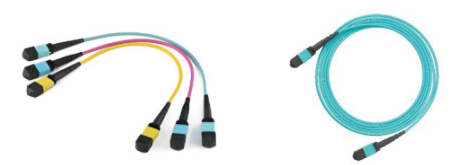
Data Center Interconnects – MPO/MTP pre‑terminated trunk cables with low insertion loss (≤0.35 dB) support 40G/100G/400G links. Verified optical performance reduces troubleshooting and rework.
Comparison: Certification & Parameter Coverage
| Product | Certifications Available | Key Parameters |
|---|---|---|
| Optical Fiber Cable GYTA53 | TL9000-H, ISO 14001, ISO 45001 | Attenuation, fiber type, bend radius, tensile strength |
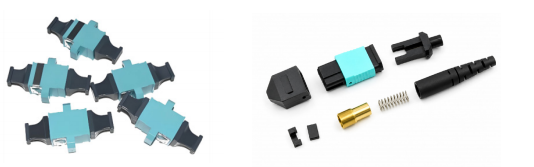
| MPO Fiber Optic Adapter MPO-12F-SM | TL9000 (cert# 15/25T15218R11), ISO 14001 | Insertion loss <0.5 dB, RL ≥50 dB, 500 mating cycles |
| MTP/MPO Fan‑out Cable MTP-12F-to-6xLC | TL9000 (WIT Assessment) | Typical IL 0.35 dB, low‑loss 0.10 dB, RL ≥60 dB |
| MPO/MTP Loopback MPO-12F-Loopback | TL9000 R6.3 | Low‑loss ≤0.7 dB, RL ≥65 dB (SM), 100k mating cycles |
Note: All data sourced from Nanfang Communication’s documented specifications and certificates.
Frequently Asked Questions (FAQ)
1. What certifications does the optical fiber cable from Nanfang Communication have?
2. What are the key specifications I should check for single-mode fiber cables?
3. What is the minimum order quantity for custom optical fiber cables?
4. Can I request samples before placing a bulk order?
5. What is the typical lead time for production orders?
Conclusion
Verifying certifications and specifications is the foundation of a successful optical fiber cable procurement. By checking TL9000, ISO, and CNAS credentials, and by validating key parameters such as insertion loss, fiber type, and material ratings, buyers can confidently select a supplier that meets project requirements. Nanfang Communication offers a full portfolio of indoor/outdoor cables, MPO components, and assemblies backed by these credentials. To learn more, download the company brochure: Download NTU Catalog.
Have Questions or Need More Details?
Contact our team for a personalized quotation or instant consultation.
Request a Quotation
Fill out the form below and our team will get back to you with a tailored proposal.
WhatsApp Direct Chat
Prefer to chat in real-time? Message us on WhatsApp for instant assistance & quick answers.
- Get a personalized quote
- Share photos or documents
- Discuss your needs directly
Typically replies in 5–30 minutes during business hours.