
MPO vs. MTP Connectors: A Practical Buyer's Comparison for High-Density Networks
MPO vs. MTP Connectors: A Practical Buyer's Comparison for High-Density Networks
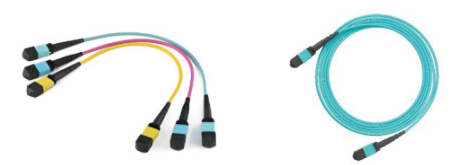
MPO and MTP connectors share one interface family; the buying decision sits in ferrule grade, insertion-loss class and mating-cycle rating.
Introduction: Why This Comparison Decides More Than a Connector SKU
Most MPO-versus-MTP evaluations do not end because one connector is superior. They end when the buying team separates the interface question from the performance-grade question, writes both into the specification, and asks the supplier to prove each requirement with data. This guide follows that order.
It is written for network engineers and procurement specialists who are already past the discovery stage: teams locking a bill of materials for a data centre fit-out, validating a sample batch, and protecting a supply line that has to hold across several deployment phases. Nanfang Communication is the operating brand of Jiangsu South Communication Technology Co., Ltd., an optical fiber, optical cable and passive-component manufacturer based in Luoyang Town, Wujin District, Changzhou City, Jiangsu Province, China, whose product range includes MPO multi-core connectors, MT-FA series optical passive components and PM FA fiber arrays. That range makes the connector decision part of a wider sourcing decision rather than a standalone purchase, which is why the comparison below stays anchored to measurable specifications.
Problem Definition: "MPO vs MTP" Is Two Questions Wearing One Name
MPO stands for multi-fiber push-on: an interface family that terminates several fibers, commonly 8, 12, 16 or 24, inside a single ferrule, so one connector position replaces a dozen duplex paths. MTP is a performance-grade designation used for an enhanced version of that same interface family. The two are built to mate with each other, and in everyday procurement language many suppliers use the terms interchangeably.
That overlap creates three predictable failures when a project treats them as competing products rather than as one interface with different grades:
- Link budgets drift. A connector specified only by name carries no insertion-loss value, so the loss allowance gets estimated somewhere in the chain and reappears later as a failed channel.
- Test tooling gets duplicated. Loopback and fan-out assemblies purchased twice, once under each name, add cost without adding capability.
- Spares and polarity fragment. Two part numbers for the same function mean two spare lines, two polarity conventions, and a higher chance of a mis-mated patch field.
The practical fix is to specify four things explicitly and let the connector name follow from them: ferrule and endface geometry grade; insertion loss and return loss class; mating-cycle durability for any port that will be re-mated; and the polarity and gender convention. Once those four are fixed on paper, the MPO-versus-MTP question becomes a supplier-quality question, and quality is something a buyer can audit.
Industry Background: What Is Actually Pulling High-Density Connector Demand
Multi-fiber connector demand is being pulled by data centre topology rather than by general telecom growth. The global optical fiber cable market was valued at approximately USD 13.45 billion in 2025 and is projected to reach USD 36.48 billion by 2034 (Custom Market Insights). China's exports of optical fiber cables under HS 854470 reached approximately USD 2.52 billion in 2024 (OEC), which reflects how much of the assembly and termination work for global projects now passes through Chinese manufacturing. On the connector side, the global fiber optic connector market was estimated at USD 11.2 billion in 2024, with LC connectors holding a dominant 35.43% share (Global Market Insights / Grand View Research) — a useful reminder that MPO and MTP expand alongside a very large duplex LC estate rather than replacing it. The MPO fiber optic connector market specifically is projected to grow at a CAGR of 13.6% through 2035, driven by AI compute clusters and hyperscale data centers (Business Research Insights).
Read market numbers with care. Published estimates for the 2025 optical fiber cable market differ materially between research houses: Global Market Insights places it at USD 14.6 billion, Custom Market Insights at USD 13.45 billion, and Grand View Research at USD 10.8 billion. For a buyer, that spread is a signal rather than a problem — market-size headlines are not a specification input. Ferrule geometry reports, measured insertion loss and mating-cycle ratings are.
At the fiber level, supply is concentrated: Corning Incorporated held more than 21.5% of the global fiber optic cable market in 2025 (Global Market Insights). At the connector and pre-terminated assembly level the supply base is far more fragmented, which means variation between suppliers is larger for connectors than for fiber. The underlying fiber standards stay stable — ITU-T G.652.D remains the industry standard for single-mode fiber, while G.657 is the primary standard for bend-insensitive fibers used in FTTH (ITU) — so a connector's loss contribution is the variable a project can still control.
Detailed Solution: The Three Variables That Actually Separate Suppliers
1. Ferrule quality and endface geometry
Both MPO and MTP connectors terminate fibers in an MT-style ferrule, a precision-molded block that holds the fiber array in position. That ferrule fixes the geometry the whole link depends on: fiber protrusion, fiber height, endface coplanarity and guide-pin hole accuracy. Two suppliers can both ship a 12-fiber MPO and still deliver different endface geometry, which is why the connector name tells a buyer almost nothing about loss performance. Geometry is set by molding and polishing rather than by assembly labor, so it is the most direct indicator of whether a supplier controls its own process or merely assembles bought-in parts.
2. Insertion loss: what a low-loss grade is worth
Insertion loss is the most quoted and least consistently applied number in multi-fiber procurement. Its weight depends on where the connector sits. In a backbone or trunk segment, several connector pairs can sit inside one channel, so a fraction of a decibel per mated pair compounds across the link. As a concrete reference point, MPO-12F-SM adapters in low-loss grade are specified with insertion loss below 0.35 dB. That figure is worth treating as a benchmark: the buyer's job is to require the measured value for the assemblies actually shipped, alongside return loss, in the test documentation, rather than accepting a catalogue statement.
3. Mating-cycle durability: the spec buyers read too late
Mating-cycle rating only becomes visible when a connector is used as a touch point. A port mated once during installation and a port mated weekly for transceiver validation are different requirements wearing the same part number. MPO-12F-SM adapters are rated for 500 mating cycles. For a permanently patched position, that headroom is far beyond what the port will ever consume. For a test bench, a validation panel or a reference link that is reconfigured during every hardware refresh, the rating is what determines how long the assembly stays inside specification. Separating one-time-install ports from repeated-mate ports and specifying them differently is among the cheapest reliability decisions in a high-density build.
4. What does not change between MPO and MTP
Fiber count, polarity convention and gender do not change because a supplier writes MTP instead of MPO. Key-up or key-down orientation, male and female guide-pin configurations, and Type A, B or C polarity rules still have to be defined by the buyer and verified on the drawing. Because the two names describe one intermateable interface family, the decision that remains is documentation and grade control: which supplier can state its ferrule tolerance, publish its loss and mating-cycle ratings, and repeat them shipment after shipment.
MPO vs. MTP at a Glance
| Decision dimension | MPO (generic interface name) | MTP (enhanced, brand-designated grade) | What to verify before ordering |
|---|---|---|---|
| Role of the term | Interface family name used across the industry | Performance designation for an enhanced version of the same family | Ask the supplier to state the difference in the data sheet, not in conversation |
| Ferrule | MT-style ferrule, multi-fiber (commonly 8/12/16/24) | MT-style ferrule with claimed tighter tolerance control | Endface geometry and interferometry report per batch |
| Insertion loss | Low-loss grade referenced at below 0.35 dB on MPO-12F-SM adapters | Must be declared by the supplier; never assume equivalence | Measured insertion loss and return loss per mated pair, with test method |
| Mating cycles | 500 cycles specified on MPO-12F-SM adapters | Supplier-declared rating | Whether the rating matches install-once or repeated-mate use |
| Intermateability | Designed to mate within the same interface family | Gender, key orientation and polarity type confirmed on the drawing | |
| Best fit | Standardised high-density builds where grade control is documented | Positions where an enhanced grade is justified by the link budget | Link budget, certification requirements and supply terms together |
The last row is the one most teams skip. Grade upgrades only pay off where the link budget needs them; applying an enhanced grade uniformly across a patch field adds cost without changing whether a channel passes.
The Assembly Portfolio Around the Connector
The connector is rarely bought alone, and the assembly type often determines whether the connector decision was the right one. Four families carry most of the demand in high-density networks.
MPO/MTP loopback assemblies return transmit signals to receive ports inside a single housing and are used for port and transceiver validation, particularly where 40G, 100G and 400G SR4 or PSM4 links consume several fiber pairs per port. A loopback with poor endface geometry produces intermittent results that get misdiagnosed as transceiver faults.
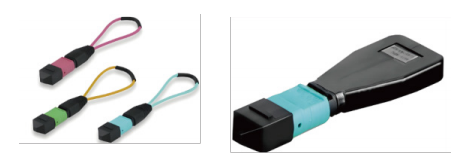
MPO/MTP loopback assemblies validate ports and transceivers during commissioning and hardware refresh cycles.
Fan-out and breakout cables convert one multi-fiber connector into several duplex paths, which is how a high-density trunk is reconciled with an equipment faceplate that still expects LC duplex ports. Fan-out assemblies are also the most common source of polarity errors, because the transition point is where the fiber mapping has to be defined and tested.
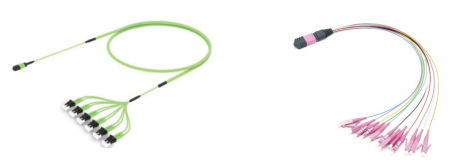
Fan-out and breakout assemblies carry the polarity mapping between a multi-fiber trunk and duplex equipment ports.
Pre-terminated trunk, module and breakout assemblies move termination into the factory, which removes field polishing and splicing from the critical path of a fit-out. Their value depends on the factory doing the testing, because the on-site team can only verify what arrives.
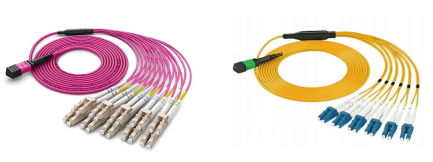
Pre-terminated breakout assemblies shift termination and testing from the site to the factory.
MPO high-density patch panels hold the connector interface in the rack and are where mating cycles concentrate, because patch fields are reconfigured whenever hardware changes. The panel is also where a supplier's polarity discipline becomes visible: if the mapping is wrong, it is wrong at every port.
Step-by-Step Breakdown: A Buyer Workflow from Specification to Supply
- Fix the link budget first. Decide how many connector pairs sit inside one channel and what insertion loss the channel can absorb. Only then decide whether an enhanced grade is justified at each point.
- Write the four locked parameters. Ferrule and endface grade, insertion loss and return loss class, mating-cycle rating, and polarity/gender convention, with fiber count and cable construction alongside them.
- Separate install-once ports from re-mated ports. Apply the higher mating-cycle requirement only where reconfiguration actually happens, such as test positions and patch fields.
- Require test data with the shipment. Measured insertion loss and return loss per mated pair, plus endface geometry inspection — not a catalogue claim.
- Validate with an assembly, not a bare connector. Test a loopback or fan-out assembly that exercises the polarity mapping and the endface at the same time.
- Approve the first article before releasing volume. Acceptance follows the contract and technical specification, with factory inspection, test reports and certificates; on-site acceptance follows the project contract acceptance criteria.
- Convert the approval into supply terms. Capacity, minimum order quantity, lead time, delivery method and after-sales path should be agreed while the technical approval is still fresh.
Use Cases: Where Each Choice Earns Its Cost
Data centre commissioning and transceiver validation. Loopback assemblies in MPO/MTP format are the standard tool for validating 40G, 100G and 400G ports. Here the mating-cycle rating and endface quality matter more than the connector name, because the assembly is handled repeatedly and its readings are used to accept or reject equipment.
40G/100G/400G SR4 and PSM4 structured cabling. These links consume multiple fiber pairs per port, which is what makes multi-fiber connectors economical: one connector position and one polarity definition replace a dozen duplex paths. The connector choice is settled by the link budget and by whether the supplier documents grade.
High-density patch fields and module-based builds. Where racks are reconfigured on a hardware refresh cycle, mating-cycle durability and polarity discipline decide how much of the cabling can be reused rather than replaced.
Multi-phase deployments. A build delivered in phases is the scenario where connector choice has the longest tail. If phase two arrives with a different ferrule grade or a different polarity convention, the cost is not the connector — it is the re-testing, re-labelling and re-training that follows.
Long-Term Supply: The Part of the Comparison That Outlives the Project
Connector decisions repeat. A data centre programme buys multi-fiber assemblies in successive waves, and each wave re-opens the same questions unless the supply relationship is built to answer them consistently. That is where an integrated supplier differs from a trading intermediary, and where the comparison should move from component data to supply evidence.

Nanfang Communication runs cable, connector and passive-component production under one quality system from a 26,795.3 m² facility in Changzhou, Jiangsu.
Nanfang Communication, formally Jiangsu South Communication Technology Co., Ltd., was founded in July 1992 and is a subsidiary of the Hong Kong-listed South Communication Holdings Limited (Stock Code: 1617.HK), with paid-in capital of RMB 150 million. The company operates a 26,795.3 m² facility with 360 employees and an annual output of 3,000,000 core kilometers, supported by 80 R&D engineers and a portfolio of more than 300 patents, including over 45 invention patents, plus 16 standards comprising one national standard and 15 industry standards. Its certifications include ISO9001 quality management, TL9000 telecommunications industry quality management, ISO14001 environmental management, OHSAS18001 occupational health and safety, the Integration of Informatization and Industrialization Management System, and ISO50001 energy management. The company also operates a CNAS-accredited laboratory working to the ISO/IEC 17025 discipline for testing and calibration, which is the practical basis for shipping assemblies with measured performance data rather than nominal ratings.
Two commercial facts matter at the execution stage. Monthly production capacity is 250,000 core kilometers with a minimum order quantity of 1 core kilometer, and lead time depends on model and quantity: sample and small orders typically take several weeks, while large orders may take months. Delivery is normally arranged by sea, land or air freight according to project needs, with common international trade payment methods such as T/T and L/C; exact terms belong in the quotation and contract.
Long-term supply also means risk management. The exposure that affects multi-fiber projects is well understood: supply chain disruption, raw material price volatility, quality instability, certification and compliance gaps, and delivery delays. The control set is equally specific — a standardized quality management system, incoming material inspection and supplier management, inventory and stockpiling, production controls and in-line inspections, and laboratory testing with certification tracking. Buyers evaluating a long-term partner should ask which of these controls the supplier actually operates, and how the evidence reaches the customer.
Integrated supplier versus imported brand: what the comparison data covers
Comparison data recorded by the manufacturer against imported brand benchmarks and other domestic integrator offerings shows a performance gap of -0.15 dB, alongside differentiation in integrated supply chain, domestic production scale, localized service support, customization and engineering services. In that comparison, large projects and those requiring local customization and fast supply are matched to domestic integrated suppliers, while imported brands are positioned for scenarios that demand extreme single-component performance or specific certifications. Cost and delivery advantages for domestic manufacturers are general rather than fixed, and exact gaps should be confirmed through quotation comparison. After-sales is the clearest structural difference: localized support and rapid response are the strength of domestic suppliers, while imported solutions may face spare-parts and support delays in some regions.
| Evaluation dimension | Integrated domestic supplier | Imported brand |
|---|---|---|
| Supply chain structure | Integrated supply chain with domestic production scale | Cross-border supply chain |
| Recorded performance gap | -0.15 dB recorded in the manufacturer's comparison data | |
| Best fit | Large projects requiring local customization and fast supply | Scenarios demanding extreme single-component performance or specific certifications |
| Cost and delivery | Generally favourable; confirm exact gaps by quotation | Confirm by quotation; positioning varies by product line |
| After-sales and spares | Localized after-sales with rapid response | May face spare-parts and support delays in some regions |
The decision rule that follows is straightforward. Where the link budget has margin and the project depends on customization, delivery speed and long-term service, an integrated domestic supplier is the lower-risk structure. Where a specification names an extreme component performance threshold, or a certification that only a specific brand carries, that requirement drives the choice instead.
Frequently Asked Questions
Do MPO and MTP assemblies fall under different compliance requirements?
No separate regime applies. Both belong to the same multi-fiber interface family and are managed under the same optical performance and quality-management framework. What changes between suppliers is the depth of documentation. Nanfang Communication holds ISO9001 quality management system certification, TL9000 telecommunications industry quality management system certification, ISO14001, OHSAS18001 and ISO50001 certifications, and operates a CNAS-accredited laboratory working to the ISO/IEC 17025 discipline for testing and calibration. For a buyer, the practical compliance request is a test report per shipment covering measured insertion loss, return loss and endface geometry, plus the certificate set that the project's acceptance criteria require.
Can one supplier deliver both MPO and MTP assemblies at high-density project volumes?
Yes, when the supplier manufactures the ferrule assemblies rather than reselling them. Nanfang Communication produces MPO multi-core connectors, MT-FA series optical passive components and PM FA fiber arrays alongside indoor and outdoor optical cables, PLC splitters and fiber optic connectors. Monthly production capacity is 250,000 core kilometers with an annual output of 3,000,000 core kilometers, supported by 80 R&D engineers and more than 300 patents including over 45 invention patents. That combination — component manufacturing plus cable production under one quality system — is what allows a single supplier to cover both the connector decision and the cable decision in a high-density build.
How should MPO and MTP pricing be compared?
Compare total installed cost rather than connector unit price. Purchase price, test documentation, polarity rework risk, spare ratio and lead time all sit inside the same budget line. Across the market, domestic manufacturers generally hold cost and delivery advantages over imported brands, and exact gaps should be confirmed through quotation comparison rather than assumed. The minimum order quantity for Nanfang Communication is 1 core kilometer, which allows a project to validate performance at low volume before committing to a deployment-scale order.
Can we validate MPO/MTP performance with a sample before committing to volume?
Yes, and it is the recommended sequence. With a minimum order quantity of 1 core kilometer, samples and small orders typically take several weeks. Acceptance follows the contract and technical specification with factory inspection, test reports and certificates, and on-site acceptance follows the project contract acceptance criteria. In practice, validate a loopback or fan-out assembly rather than a bare connector, because the assembly exercises endface quality and polarity mapping at the same time — the two factors that most often cause a channel to fail.
What lead times should be planned for MPO/MTP connector orders?
Lead time depends on model and quantity. Sample and small orders typically take several weeks, while large orders may take months. Because high-density projects usually install in waves, the more useful planning step is to agree a delivery rhythm with the supplier at the same time as the technical approval, so that phase two and phase three do not re-open the specification. Nanfang Communication maintains 28 provincial-level offices and long-term relationships with operators including China Telecom, China Mobile, China Unicom and China Broadcast Network, as well as private network users in high-speed rail, power grid and chemical industries, which supports localized sales, technical support and after-sales service.
Conclusion: Decide on Grade, Not on the Label
The MPO-versus-MTP question resolves the same way in most high-density projects. The two names describe one intermateable interface family, and the differences that matter are ferrule and endface quality, insertion-loss class — with low-loss MPO-12F-SM adapters specified below 0.35 dB as a working benchmark — and mating-cycle durability, rated at 500 cycles on those adapters. Buyers who fix those three parameters, define polarity and gender, and require measured test data per shipment end up with a specification that any qualified supplier can be held to.
The second half of the decision is supply. Multi-fiber connectors are bought repeatedly across deployment phases, so the supplier's production capacity, quality system, laboratory accreditation and after-sales structure matter as much as the part number. Nanfang Communication combines component and cable manufacturing with TL9000 and ISO9001 quality management, a CNAS-accredited laboratory, a monthly capacity of 250,000 core kilometers and a minimum order quantity of 1 core kilometer — enough scale to serve a phased deployment without forcing a change of supplier between phases.

Component and cable manufacturing under one quality system supports continuity across multi-phase deployments.
Next Step
If you are specifying multi-fiber assemblies for a 40G, 100G or 400G build, request the MPO/MTP product catalogue and a quotation matched to your ferrule grade, loss class and polarity requirements. Samples and small orders can be arranged from a minimum order quantity of 1 core kilometer.
Download the product catalogue: Nanfang Communication MPO catalogue (PDF)
Email: info@jsnfgroup.com | Tel: +86 51988792646 | WhatsApp: +8619850287785
Website: https://www.jsnfgroup.com/en.php
Have Questions or Need More Details?
Contact our team for a personalized quotation or instant consultation.
Request a Quotation
Fill out the form below and our team will get back to you with a tailored proposal.
WhatsApp Direct Chat
Prefer to chat in real-time? Message us on WhatsApp for instant assistance & quick answers.
- Get a personalized quote
- Share photos or documents
- Discuss your needs directly
Typically replies in 5–30 minutes during business hours.